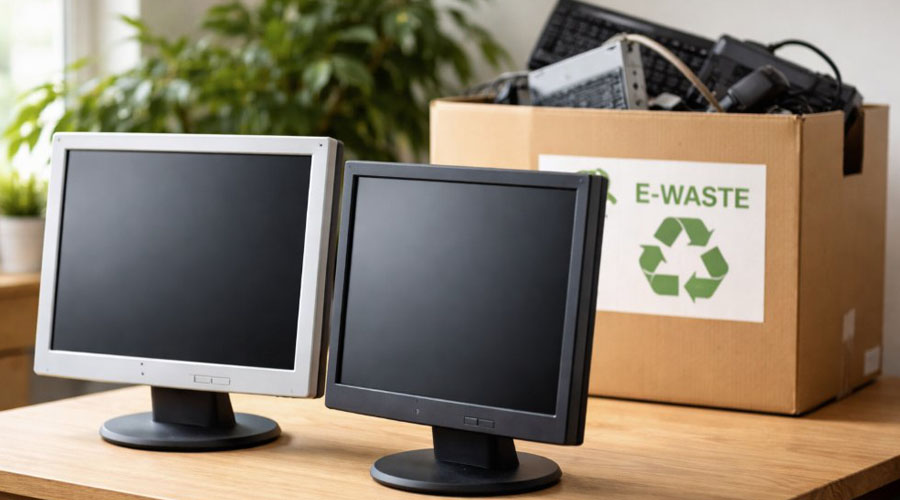
In the modern digital landscape, the office monitor is often the most overlooked piece of hardware during a technology refresh. Whether it’s a high-end graphic design display or a standard office screen, these devices are more than just glass and plastic—they are sophisticated electronic components that require specific handling at the end of their lifecycle.
As California’s e-waste regulations tighten in 2026, understanding how to properly retire these devices is essential for San Diego businesses and homeowners alike.
1. More Than Just a Display: The Hidden Risks
Many users assume that because a monitor doesn’t “store” files like a hard drive, it is safe to toss. This is a misconception, especially with modern smart displays, interactive kiosks, and high-performance monitors that contain internal circuit boards with sensitive configuration data.
Beyond data, monitors present two primary disposal challenges:
- Hazardous Components: Older LCDs often contain mercury-filled backlighting, while newer LED and OLED models contain rare-earth metals that can contaminate local water tables if sent to a standard landfill.
- Structural Fragility: Monitors are notoriously difficult to transport. A cracked screen in a refuse truck can release hazardous dust and sharp shards, making them a significant safety liability for municipal sanitation workers.
2. California’s 2026 E-Waste Mandates
Under the current California Electronic Waste Recycling Act, monitors are classified as “covered electronic devices.” This means they are strictly prohibited from entering the general waste stream. San Diego’s sanitation and code enforcement departments have intensified their monitoring of commercial dumpsters and residential bins to ensure compliance. Failure to properly dispose of these items can lead to significant citations for both businesses and private property owners.
3. The Professional Advantage: Why “Drop-Off” Isn’t Always Enough
While some might consider driving to a county collection event, that approach lacks the security and convenience required for professional environments. When you retire an entire workstation or a fleet of office monitors, you need a chain of custody that guarantees environmental compliance.
Next Life Recycling specializes in Monitor Recycling in San Diego, providing a streamlined process that manages the complexities of display technology from the moment of pickup.
Why professional handling matters:
- Resource Recovery: We dismantle monitors into their core material streams—glass, plastics, and precious metals—ensuring that these components are returned to the manufacturing circular economy.
- Liability Protection: Using a certified recycler ensures that your business remains compliant with state environmental mandates, removing the burden of disposal documentation.
- On-Site Logistics: We handle the heavy lifting, packing, and secure transport, so your team can focus on their actual work rather than wrestling with bulky, fragile screens.
4. Preparing Your Monitors for Pickup
If you are planning to upgrade your office or home setup, follow these simple steps to ensure a smooth collection:
- Identify the Units: Keep a list of sizes and types (LCD, LED, etc.) so we can provide an accurate quote.
- Keep the Bases Attached: Unless you are low on space, keeping the monitor stands attached makes the equipment much safer to transport.
- Notify Us of Specialty Displays: If you have medical-grade monitors, large-format plotters, or specialized touchscreens, let us know in advance to ensure we have the correct handling equipment.
Ready to Clear Your Workspace?
Don’t let outdated hardware clutter your office or pose a risk to the environment. Whether you are replacing a single monitor or clearing out an entire corporate wing, we provide the secure, compliant, and convenient Monitor Recycling in San Diego you need.