A UPS is the piece of equipment nobody thinks about until the power flickers — and then it’s the only thing standing between your servers and an unplanned shutdown. But the batteries inside a UPS don’t last forever, and when they reach the end of their life, they become one of the heaviest and most hazardous items in a server room or data center. Knowing when to replace them, and how to dispose of them correctly, protects both your uptime and your compliance record.
Here’s what San Diego IT and facilities teams should know about UPS battery backup systems: how to spot batteries that are due for retirement, how to store them safely until pickup, and what happens once they’re recycled.
Why UPS Batteries Are Different From Other E-Waste
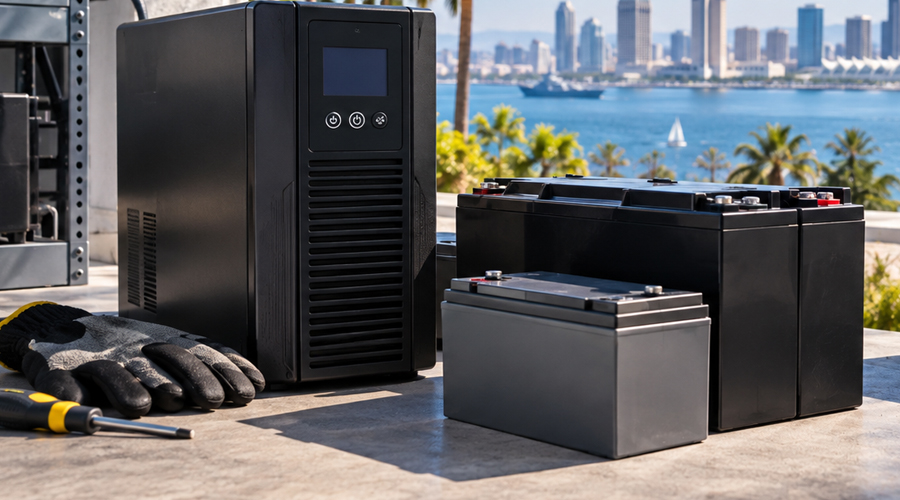
Most UPS systems use sealed lead-acid batteries, and newer units increasingly use lithium-ion. Both chemistries carry risks that a retired switch or desktop doesn’t. Lead-acid batteries contain lead and sulfuric acid, they’re heavy, and a damaged one can leak. Lithium-ion batteries can overheat if punctured or short-circuited.
That’s why UPS batteries are handled separately from general IT equipment — they need to be packaged, transported, and processed with the chemistry in mind, not just tossed in with the rest of a decommissioned rack.
Signs Your UPS Batteries Are Due for Replacement
UPS batteries rarely fail all at once. Watch for these warning signs:
-
›
Shorter runtime: The UPS can no longer carry your load for as long as it used to during a power event or test. -
›
Replace-battery alerts: Most units display an alarm or indicator when battery health drops below a threshold. -
›
Age: Batteries approaching the end of their typical service life should be tested or replaced proactively, even if they still seem to work. -
›
Heat exposure: UPS units running in warm rooms tend to wear out their batteries faster than those kept cool.
Swollen or leaking batteries need extra care. If a battery case is bulging, cracked, or leaking, don’t puncture it and don’t handle it with bare hands. Keep it isolated and let a professional recycler contain it safely.
How to Store Retired UPS Batteries Until Pickup
Retired batteries shouldn’t sit in a corner indefinitely. Until they’re collected:
-
›
Keep them cool and dry: Heat and moisture accelerate case damage and leakage. -
›
Protect the terminals: Make sure terminals can’t touch each other or metal surfaces, which can cause a short circuit. -
›
Store them on a stable surface: Heavy batteries stacked unevenly can tip, crack, or injure someone moving them.
What Happens to UPS Batteries When They’re Recycled
Safe collection: Batteries are packaged and transported with terminals protected against short circuits.
Sorting by chemistry: Lead-acid and lithium-ion units are separated, since each is processed differently.
Certified processing: Batteries are processed at certified facilities in line with California law.
Material recovery: Metals and plastics are recovered so they can go back into the manufacturing supply chain.
Why Businesses Shouldn’t Let Retired UPS Batteries Pile Up
In California, spent batteries are classified as Universal Waste, which means they can’t legally be thrown out with regular trash. For a business, retired UPS batteries sitting in a storage room aren’t just clutter — they’re a safety hazard and a compliance liability if they’re ever inspected or audited.
The simplest fix is to fold UPS batteries into the same pickup as the rest of your retired IT equipment, so nothing gets left behind.
We handle UPS batteries through our Battery Recycling in San Diego service, and they can be picked up together with servers and networking equipment as part of Corporate E-Waste Recycling.
Frequently Asked Questions
Can I throw an old UPS battery in the trash?
No. In California, spent batteries are classified as Universal Waste and can’t legally go into regular trash. They need to be recycled through a certified handler.
Do you accept both lead-acid and lithium-ion UPS batteries?
Yes. We handle almost every battery chemistry, including lead-acid units used in UPS backup systems and lithium-ion battery packs.
What if a battery is swollen or leaking?
We can still take it, but please handle it with extreme care and don’t puncture it. Contact us so we can arrange safe containment and pickup.
Is there a fee for recycling UPS batteries?
It depends on the battery type and volume. Some types, like lead-acid, have recoverable value, while others cost more to process responsibly. Contact us with your volume and battery type for current pricing.
When was the last time your team tested the batteries in your UPS systems? If replacements are on the horizon, plan the recycling at the same time so the old batteries don’t end up in storage.